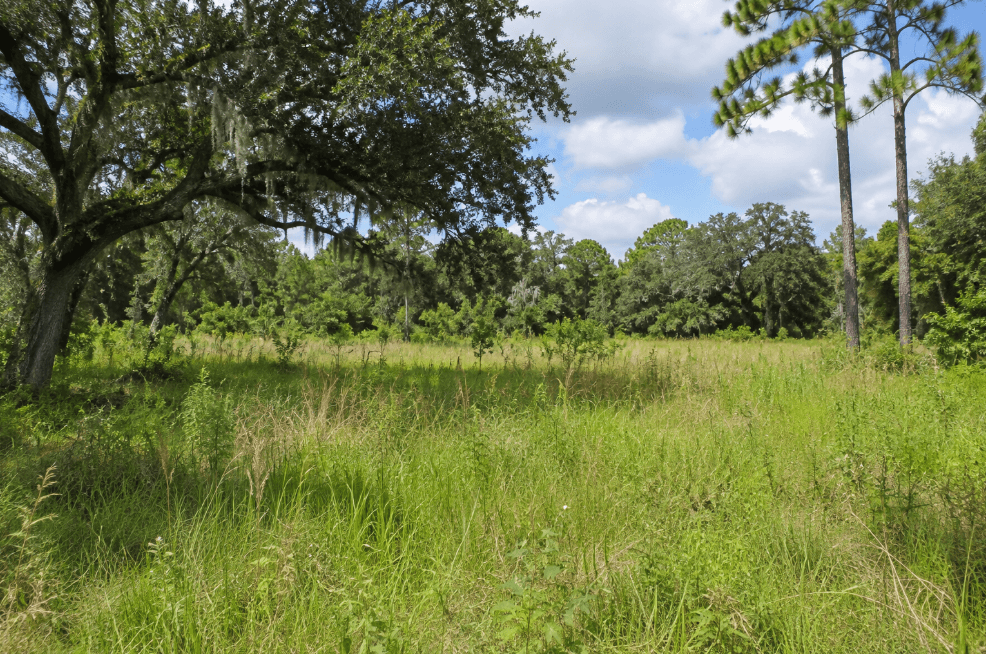
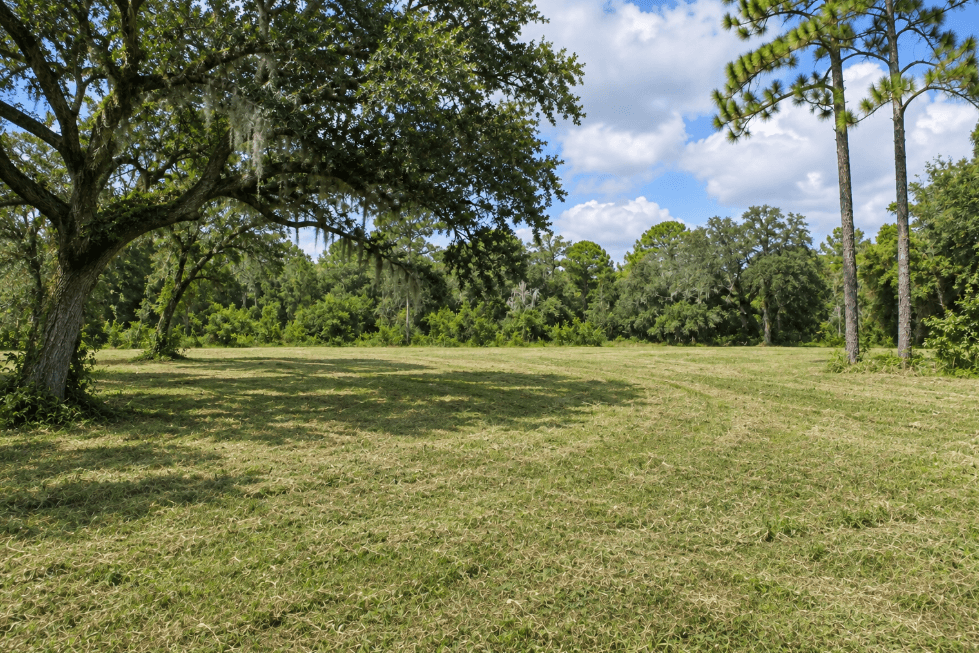
We cut tall grass, weeds and light woody growth on accessible fields, trails and fence lines around Chattanooga. Our tractor-mounted rotary cutter handles suitable stems up to about 1 inch in diameter. Larger trees remain, and roots stay in the ground.
Best for grass, weeds and slender regrowth on ground our tractor can safely reach.
Weeds and light brush with stems up to 1 inch in diameter.
Planned cutting passes across fields, trails and fence lines.
A manageable field finish while roots and surrounding trees remain.
The customer wanted to walk and enjoy their 5-acre field with family. We bush hogged the tall grass, weeds and light brush to a manageable height. The rough-cut field stayed open, with surrounding trees retained and cuttings left on-site.
Project Cost
$525
Timeline
3–4 hours
Our Bush Hogging Process and Equipment
Our process uses a tractor-mounted rotary cutter to cut tall grass, weeds and light brush with stems up to about 1 inch in diameter. We first check the field for hidden obstacles and access, then choose a suitable cutting height and work in overlapping passes. We finish by checking the agreed paths, edges and usable field area.
Field Growth We Cut in the Chattanooga Area
Open acreage may have tall grasses, broadleaf weeds and thin woody regrowth. Young red cedar and thicker privet can reclaim old field edges but need assessment for another method. We inspect sloped or vine-covered ground for rocks, holes, old fencing and hidden stumps before choosing cutting routes.
Land Clearing Questions, Clear Answers.
What is the difference between bush hogging, mulching and clearing?+
Our bush hogging cuts grass, weeds and light brush with stems up to about 1 inch. Our track-loader mulching process handles underbrush and suitable trees up to 7 inches, leaving mulch on-site. Land clearing addresses permit-approved larger trees, stump or root work and hauling, as included in your quote.
How long will my project take?+
Light cutting may take hours, while clearing and haul-off can take several days. The case studies show individual scopes, not guaranteed production rates. Acreage, ground conditions, equipment access, weather and approvals affect the schedule.
Will mowing or mulching stop privet and kudzu from returning?+
One pass does not guarantee permanent control. Cutting and shredding can leave living roots or crowns that produce new growth. We discuss repeat maintenance or a separate vegetation-management plan. Dense vines can also hide holes, debris and old fencing.